
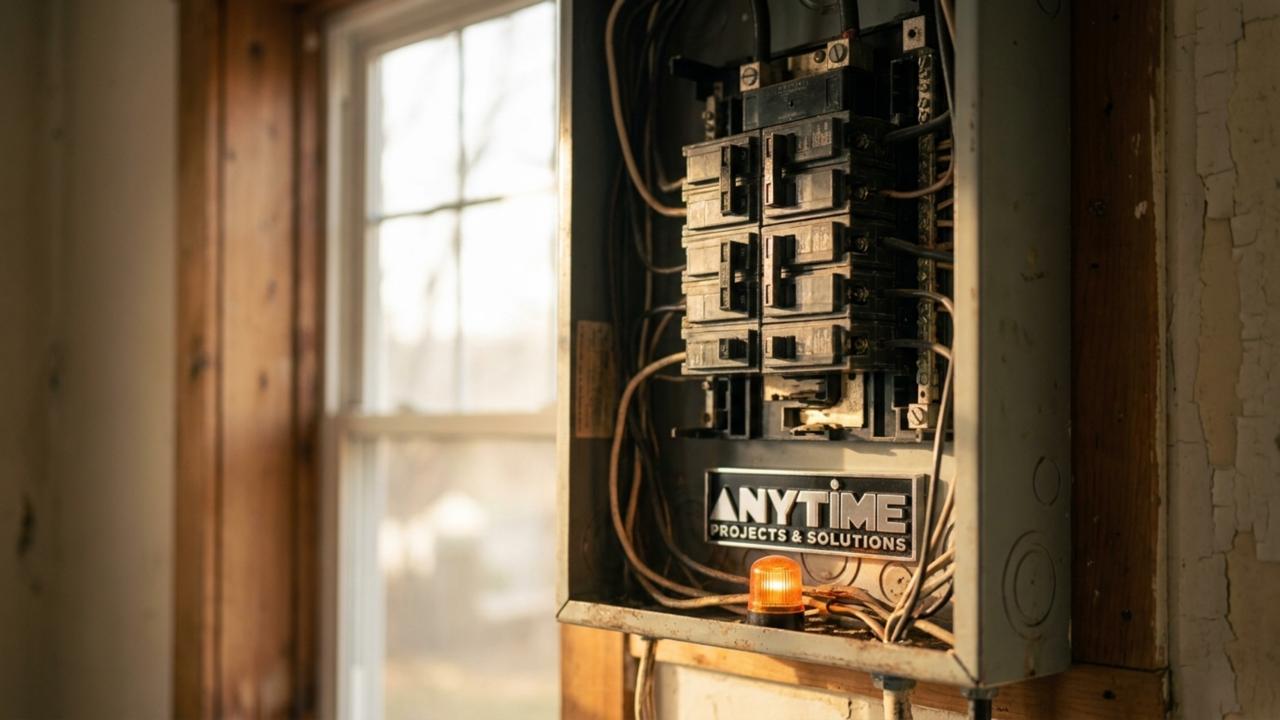
Utilities & Insulation
Flickering Lights and Warm Outlets: What Your Old Hudson Home Is Trying to Tell You
The valley's older homes are gorgeous and often under-wired for how we live now. Some electrical quirks are harmless; others are the early warning before a fire. Here's how to tell them apart.

The Anytime Hudson Field Desk
Hudson Valley Home-Services Team
June 23, 2026 · 7 min read
The Hudson Valley is full of homes built long before anyone owned a microwave, a window AC, and a bank of phone chargers. The wiring in a lot of them was fine for 1955 and is quietly overloaded for 2025. Most of the time it copes. Sometimes it warns you first — and those warnings are worth knowing.
This isn't a scare piece. It's the difference between the quirks you can live with and the ones you stop and deal with today.
The signs that mean 'call someone now'
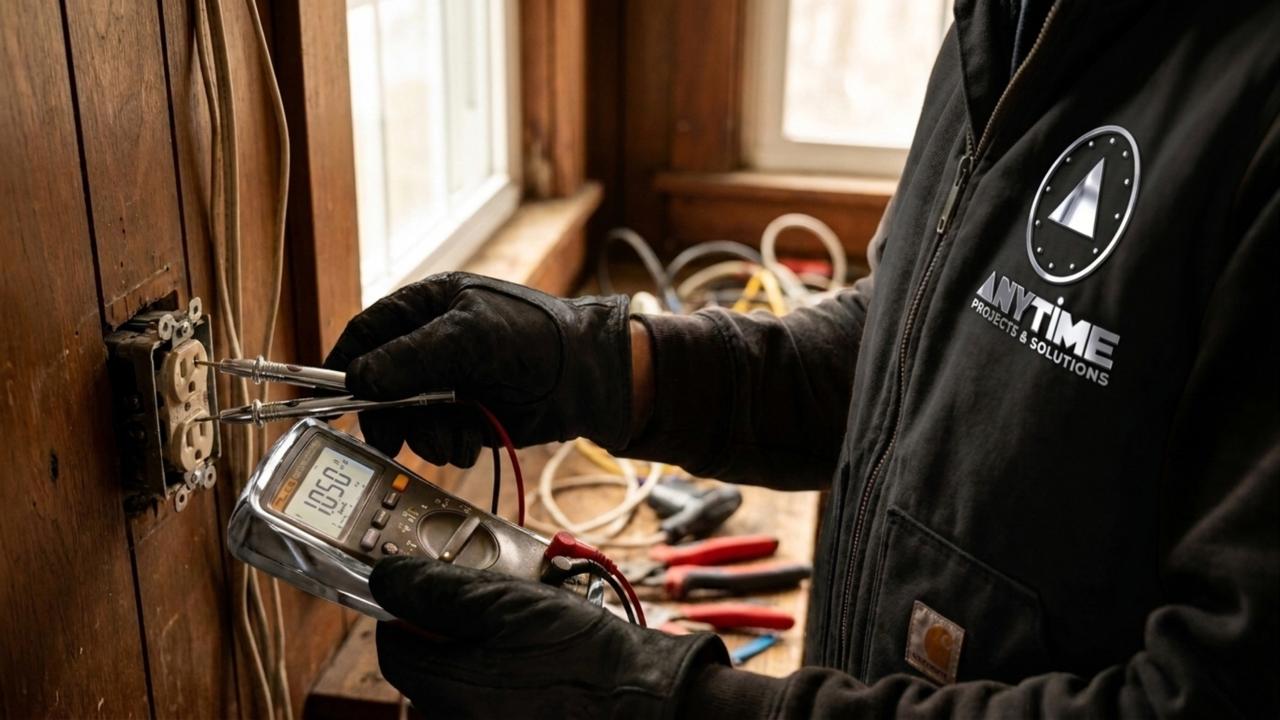
An outlet or switch plate that's warm to the touch. A burning or fishy plastic smell near an outlet or the panel. Scorch marks or discoloration around a receptacle. Breakers that trip repeatedly on the same circuit. Any of these means a connection is overheating, and overheating connections are how electrical fires start. Stop using that circuit and get it looked at.
These are not 'monitor it' problems. They're the ones we want you to treat as urgent.
Included with Anytime Hudson
One membership. Every job on this list, handled.
Bronze, Silver, Gold, and Platinum members keep their homes on schedule with vetted Hudson Valley crews — services included or discounted, at rates locked for a full year.
The quirks that are annoying but usually fine
Lights that dim for a second when the fridge or furnace kicks on — that's normal inrush current on a big motor, especially on an older service. One light bulb that flickers is usually just a loose bulb or a worn fixture.
But whole-house flickering, or lights that dim and brighten on their own, can signal a loose main connection or an overloaded service — that one's worth an inspection even though it feels minor.
Two upgrades worth doing in an old valley home
GFCI protection anywhere near water — kitchens, baths, outdoors, the basement, the garage. Older homes predate the requirement, and a GFCI outlet is a cheap, code-required safeguard against shock. Many homes are missing them exactly where they matter most.
And if you still have a fuse box, or a panel from a brand with a known failure history, that's worth a professional evaluation. Not because it will definitely fail, but because the cost of finding out the hard way is the whole house.
Stop worrying about this one
One membership. Every job on this list, handled.
Bronze, Silver, Gold, and Platinum members keep their homes on schedule with vetted Hudson Valley crews — services included or discounted, at rates locked for a full year.
Keep reading
More from the Journal
The Anytime Hudson Journal
Catch the next problem before it catches you.
Seasonal, Hudson-specific home-care guides from the crews who do the work — straight to your inbox. Free, occasional, and genuinely useful.
No spam. Unsubscribe anytime.