
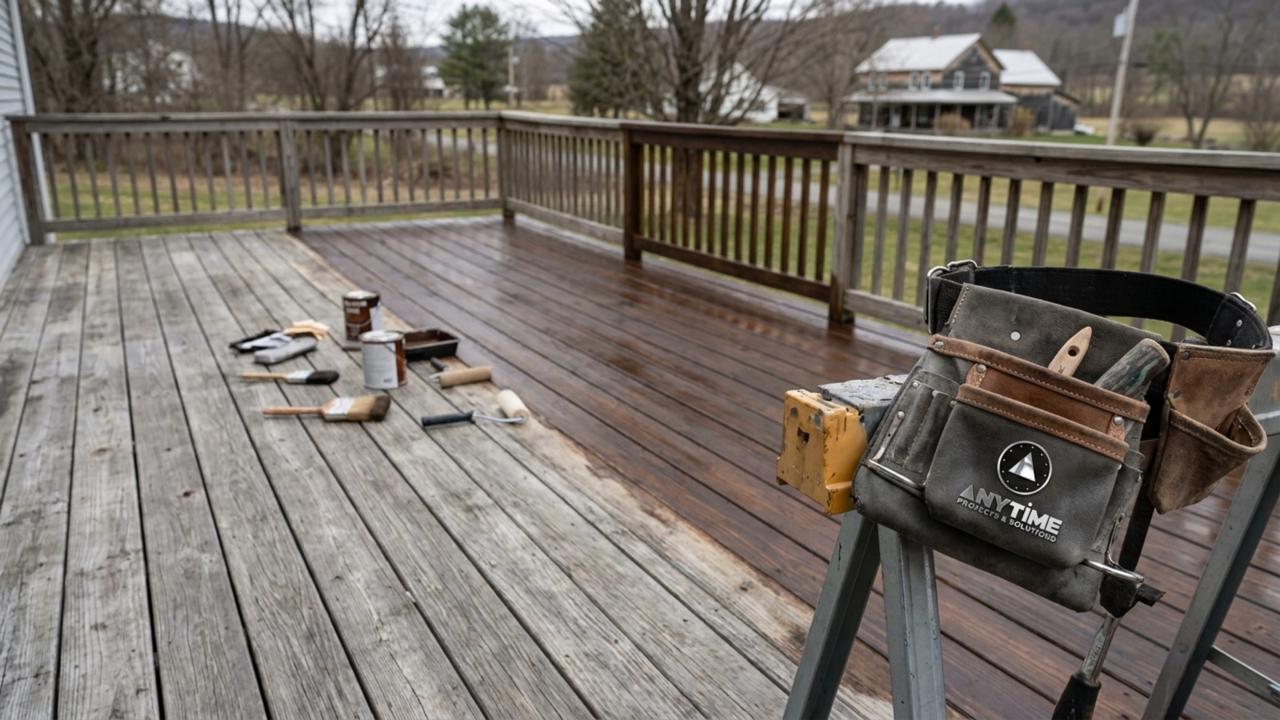
Major Projects
Your Deck Is Rotting From the Top Down — and You Can Stop It in a Weekend
Sun and valley winters strip a deck's finish fast, and bare wood drinks water until it rots. Sealing isn't cosmetic — it's the difference between a 10-year deck and a 25-year one.

The Anytime Hudson Field Desk
Hudson Valley Home-Services Team
June 26, 2026 · 6 min read
A wood deck is a floor with no roof over it, taking full sun in summer and full freeze-thaw in winter. Left bare it grays, cracks, and eventually goes soft — and a soft deck board is a safety problem, not just an ugly one.
The thing is, protecting it is one of the most satisfying weekend jobs there is, and it dramatically extends how long the deck lasts. Here's how to do it so it actually holds.
Why bare wood fails here specifically
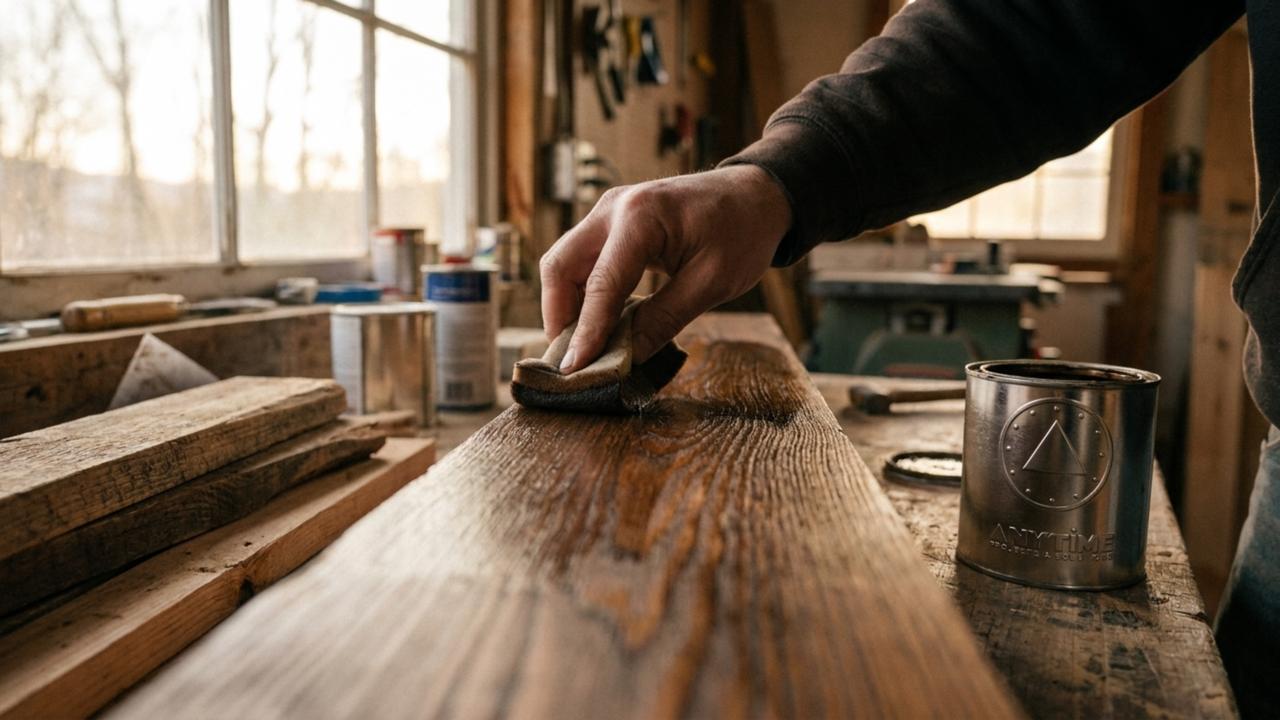
Two things kill a valley deck: UV and water. Sun breaks down the surface fibers and fades the wood to gray. Then rain and snowmelt soak into that opened-up surface, and when it freezes the water expands inside the board and splits it from within. Repeat that every winter and the boards check, cup, and eventually rot at the fastener holes.
A sealer or stain does two jobs: it blocks UV and it sheds water so it never soaks in to freeze. That's the whole game.
Included with Anytime Hudson
One membership. Every job on this list, handled.
Bronze, Silver, Gold, and Platinum members keep their homes on schedule with vetted Hudson Valley crews — services included or discounted, at rates locked for a full year.
Prep is 90% of the result
This is where weekend jobs go wrong. Sealer over dirty, gray, or damp wood doesn't bond — it peels in a season. Clean the deck first with a deck cleaner, let it dry fully (a couple of dry days, not overnight), and if the wood has gone gray, use a brightener to open the surface back up so the finish can soak in.
Don't blast it with high pressure to clean it — that raises the grain and etches the boards. Gentle wash, full dry, then finish.
How often, and the water test
In our climate, plan on re-coating every two to three years for a semi-transparent stain, sooner on the sun-baked south-facing sections. There's a simple test: splash water on the boards. If it beads, the finish is still working. If it soaks straight in and darkens the wood, it's time to reseal.
Catch it at the beading-stops stage and it's a weekend refresh. Ignore it for five years and you're replacing boards instead of coating them.
Stop worrying about this one
One membership. Every job on this list, handled.
Bronze, Silver, Gold, and Platinum members keep their homes on schedule with vetted Hudson Valley crews — services included or discounted, at rates locked for a full year.
Keep reading
More from the Journal
The Anytime Hudson Journal
Catch the next problem before it catches you.
Seasonal, Hudson-specific home-care guides from the crews who do the work — straight to your inbox. Free, occasional, and genuinely useful.
No spam. Unsubscribe anytime.