
Major Projects
Frozen Pipes: How One Cold Night Turns Into a Flooded Ceiling
A burst pipe can dump hundreds of gallons into your home before you're even awake. In the Hudson Valley the risk is real every winter. Here's how pipes freeze and the cheap habits that prevent it.

The Anytime Hudson Field Desk
Hudson Valley Home-Services Team
July 2, 2026 · 6 min read
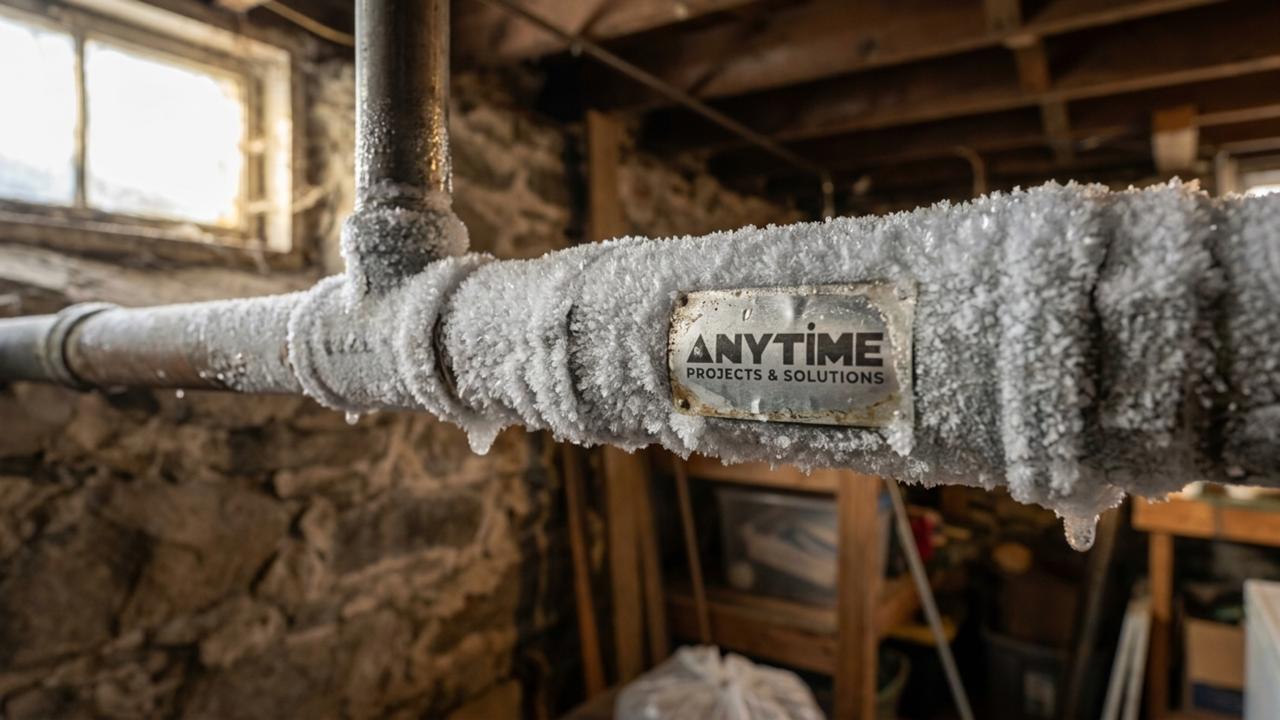
A frozen pipe is quiet. It freezes overnight, the ice expands and splits the pipe, and nothing happens — until it thaws. Then the split opens and water pours out, often into a wall or ceiling, sometimes for hours before anyone notices.
The valley gets the cold snaps that do this, especially in older homes with pipes run through exterior walls, crawl spaces, and unheated garages. The good news: prevention is mostly cheap and mostly habit.
Which pipes freeze — and why it's usually the same ones
Water expands about nine percent when it freezes, and a closed pipe has nowhere to give. The pipes at risk are the ones exposed to cold: along exterior walls, in unheated basements and crawl spaces, in the garage, and the outdoor hose bibs.
The classic valley failure is the kitchen sink on an exterior wall — the pipe runs up through an uninsulated wall cavity, a cold night hits, and the split shows up under the cabinet the next afternoon.
Included with Anytime Hudson
One membership. Every job on this list, handled.
Bronze, Silver, Gold, and Platinum members keep their homes on schedule with vetted Hudson Valley crews — services included or discounted, at rates locked for a full year.
The cheap prevention that actually works
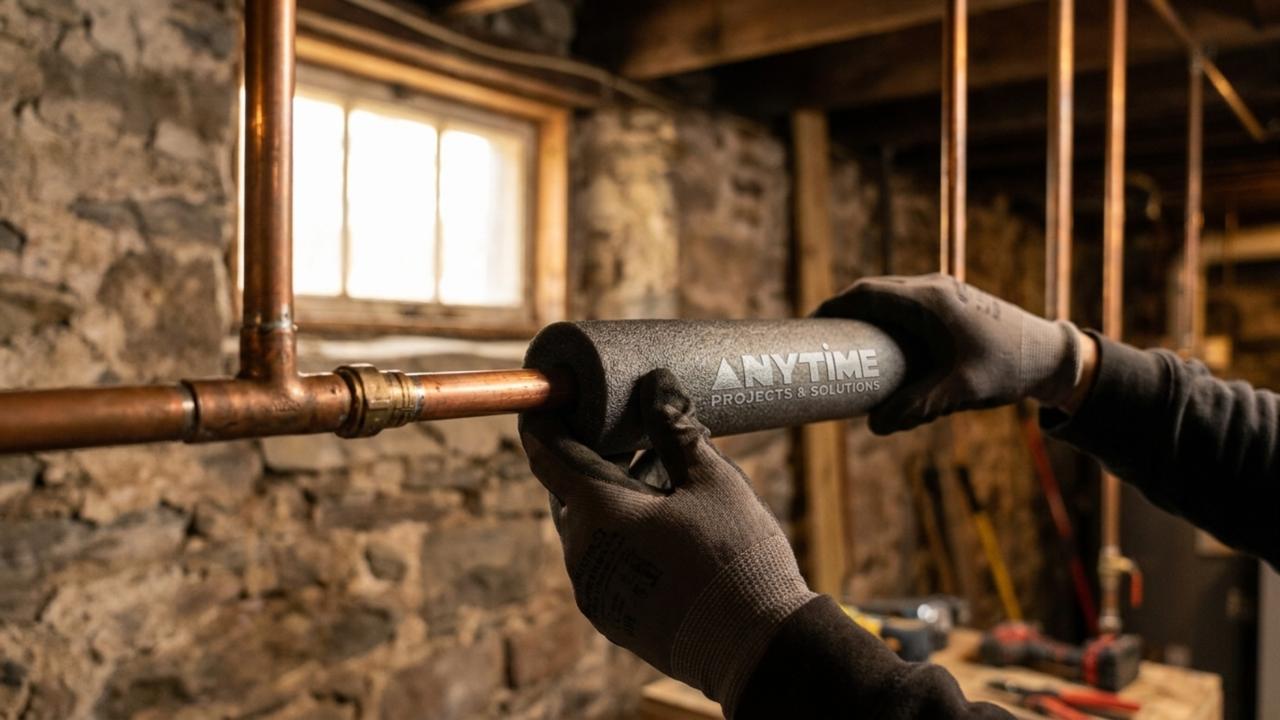
Disconnect and drain the garden hoses before the first freeze and shut off the interior valve to the outdoor bibs. Sleeve exposed pipes with foam insulation — it's a couple dollars a length. On the coldest nights, let a faucet on an exterior wall drip; moving water is much harder to freeze and it relieves pressure.
Open the cabinet doors under sinks on exterior walls so household heat reaches the pipes. If you travel in winter, never set the thermostat below 55, and have someone check the house.
Know where your main shutoff is — before you need it
If a pipe does burst, the difference between a mopped-up scare and a destroyed ceiling is how fast you kill the water. Everyone in the house should know where the main shutoff is and that it turns. Go find it today and turn it a quarter — a valve that hasn't moved in ten years sometimes won't when you're standing in an inch of water.
Pipes that freeze repeatedly are telling you something — a cold run that needs rerouting, insulating, or heat-taping. That's worth fixing permanently instead of white-knuckling every cold snap.
Stop worrying about this one
One membership. Every job on this list, handled.
Bronze, Silver, Gold, and Platinum members keep their homes on schedule with vetted Hudson Valley crews — services included or discounted, at rates locked for a full year.
Keep reading
More from the Journal
The Anytime Hudson Journal
Catch the next problem before it catches you.
Seasonal, Hudson-specific home-care guides from the crews who do the work — straight to your inbox. Free, occasional, and genuinely useful.
No spam. Unsubscribe anytime.