
Major Projects
Repair or Replace? How to Read a Tired Roof Before It Reads You
A roof rarely dies all at once. It tells you it's going for years first. Here's how to tell a repair from a replacement, and why the cheapest bid is often the most expensive roof.

The Anytime Hudson Field Desk
Hudson Valley Home-Services Team
June 29, 2026 · 8 min read
A roof is the one part of the house doing battle with the weather every single day, and in the Hudson Valley that means sun, ice, wind, and freeze-thaw all year. It wears out. The question homeowners struggle with is whether they're looking at a patch or a replacement — and roofers on both extremes will happily tell you what serves them.
Here's how to read it yourself before you get quotes, so you can tell an honest bid from a scary one.
The signs that point to replacement, not repair
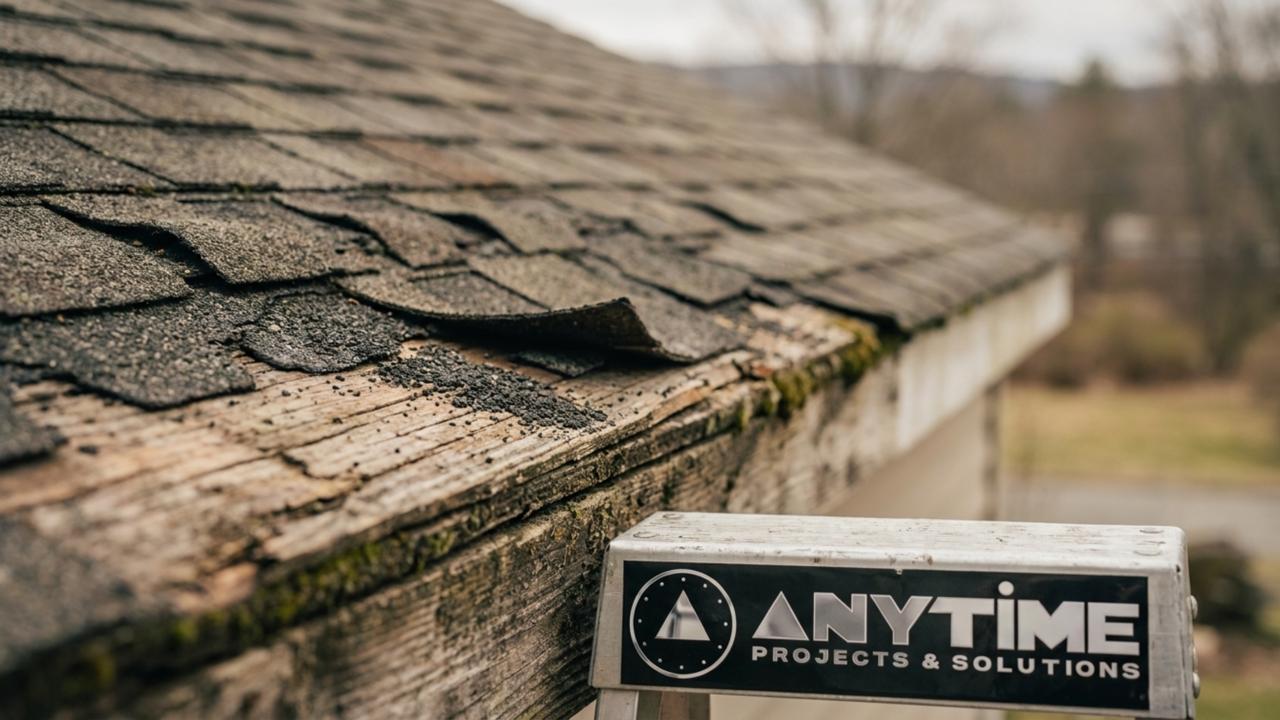
Curling or cupping shingles across whole slopes, bald patches where the protective granules have washed off (check your gutters for what looks like coarse black sand), and daylight or soft, spongy decking in the attic — those are systemic, not spot problems.
Age matters too. A standard asphalt roof in our climate runs roughly 20 to 25 years. If yours is in that window and showing several of these signs at once, you're maintaining borrowed time, and every repair is money spent on a roof that's leaving anyway.
Included with Anytime Hudson
One membership. Every job on this list, handled.
Bronze, Silver, Gold, and Platinum members keep their homes on schedule with vetted Hudson Valley crews — services included or discounted, at rates locked for a full year.
When a repair is genuinely the right call
A young roof with damage confined to one area — a few shingles torn off in a windstorm, a flashing leak around a chimney or vent, a single problem valley — is a repair, full stop. Don't let anyone talk you into replacing 2,000 square feet because 50 of them failed.
The honest test: is the problem local and the rest of the roof sound, or is the whole field worn out? Local and sound means repair. Worn everywhere means plan the replacement.
Why the cheapest bid is often the priciest roof
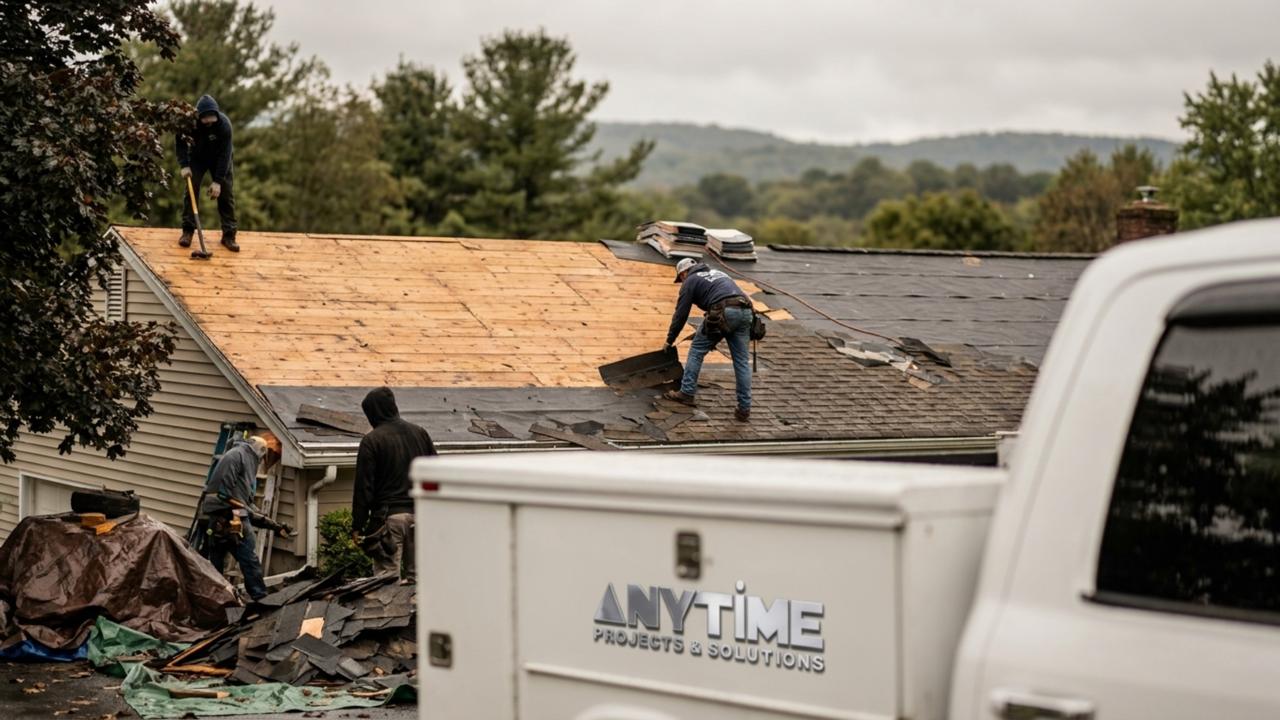
A roof is mostly labor and detail. The lowball bid usually saves money by skipping the parts you can't see from the ground: ice-and-water shield at the eaves and valleys (essential here), proper flashing instead of a smear of tar, adequate ventilation, and tearing off the old layers instead of shingling over them.
Those omissions are exactly what cause the next leak. In our freeze-thaw climate, the underlayment and flashing details are the roof. Pay for the details and the shingles last their full life; skip them and you're back up there in five years.
Stop worrying about this one
One membership. Every job on this list, handled.
Bronze, Silver, Gold, and Platinum members keep their homes on schedule with vetted Hudson Valley crews — services included or discounted, at rates locked for a full year.
Keep reading
More from the Journal
The Anytime Hudson Journal
Catch the next problem before it catches you.
Seasonal, Hudson-specific home-care guides from the crews who do the work — straight to your inbox. Free, occasional, and genuinely useful.
No spam. Unsubscribe anytime.